
Exhibition Design: Resisting Slavery
The challenge
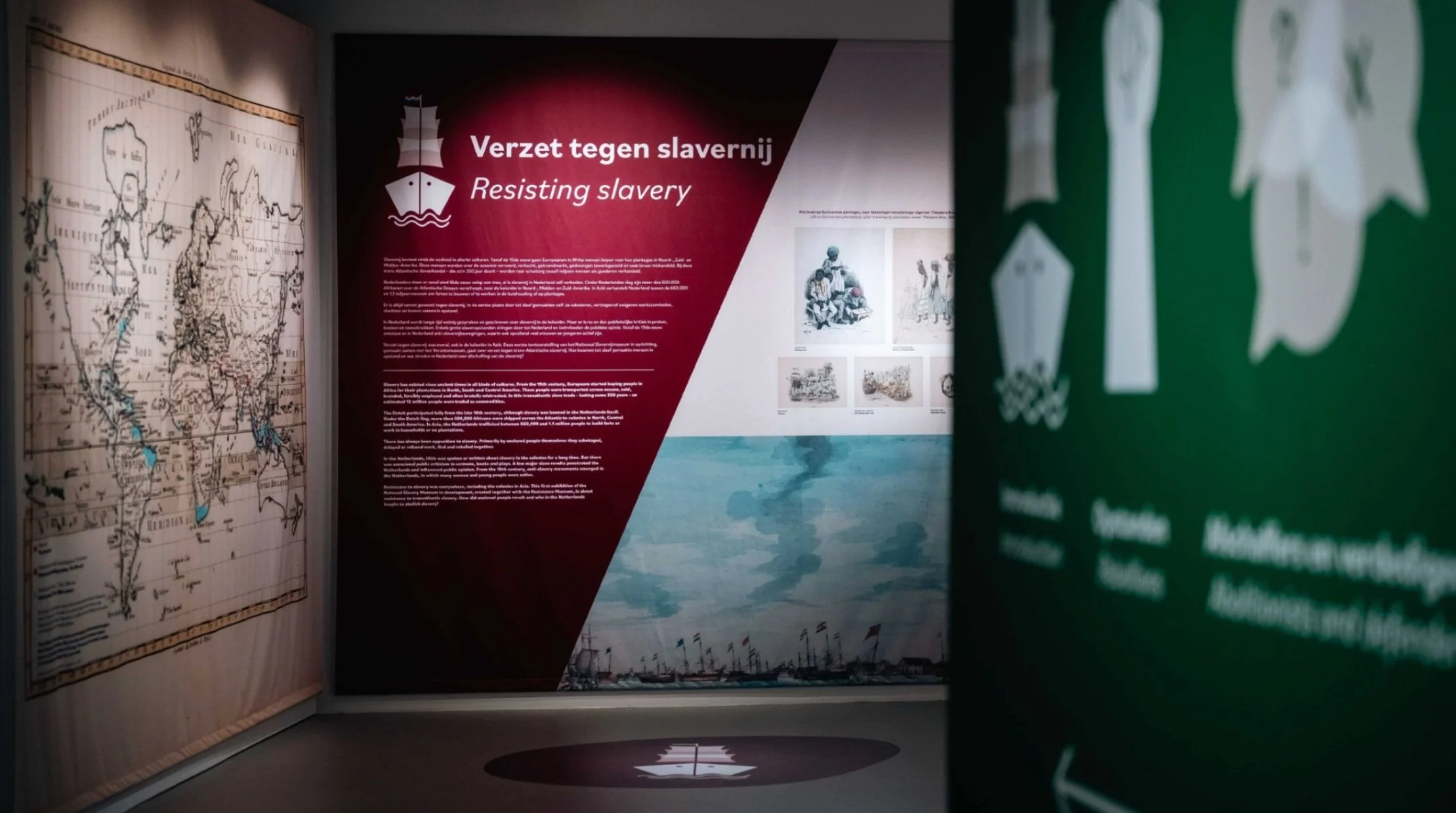
How do you introduce a new museum through a pop-up exhibition on resistance and the abolition of slavery in a way that’s accessible and inspiring for diverse audiences? The traveling exhibition Resisting Slavery from the National Slavery Museum aimed to spark dialogue, build curiosity for the new museum, and foster a deeper understanding of these critical historical themes.
The gig
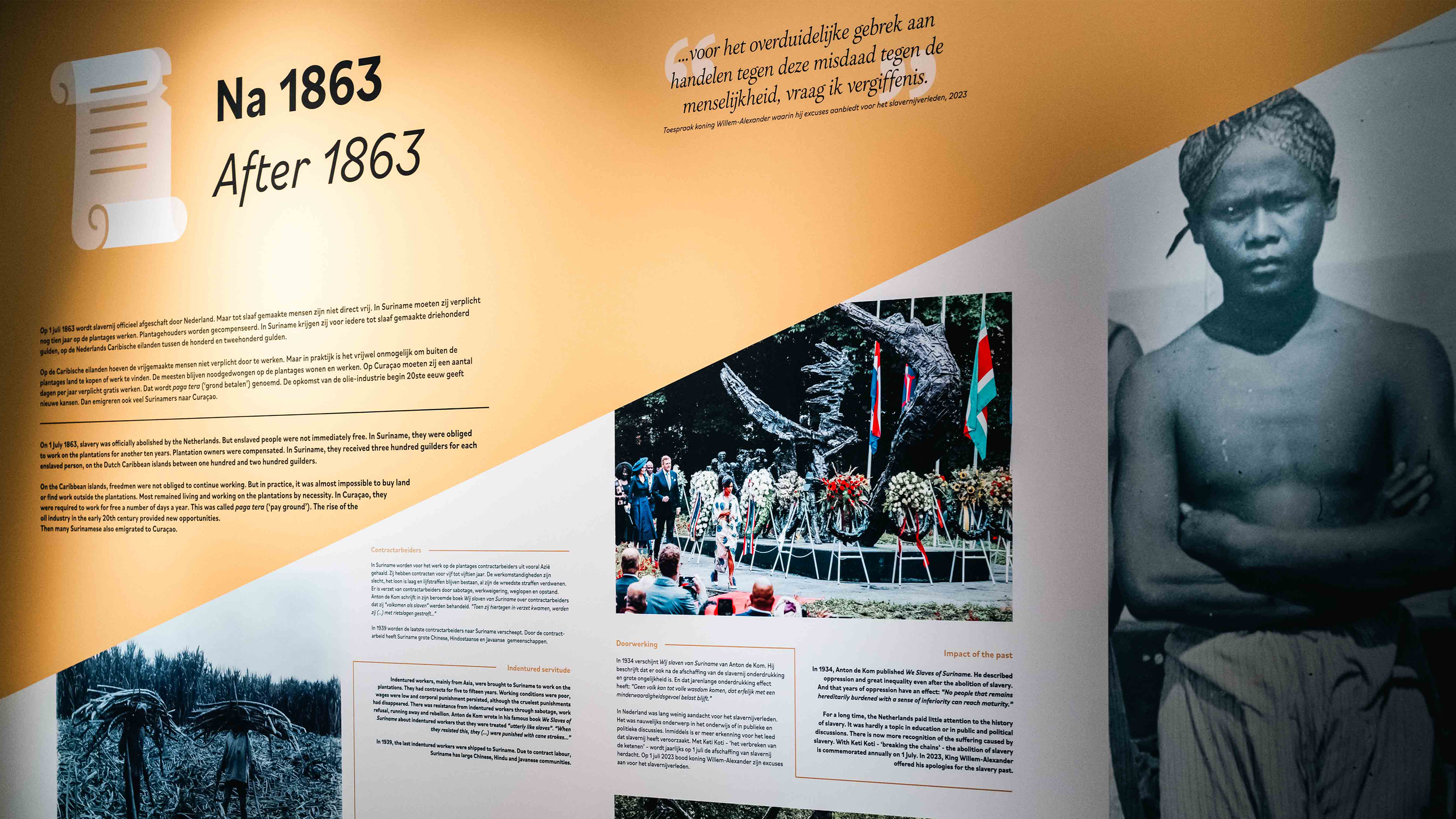
As the graphic designer, I collaborated with the Resistance Museum and the National Slavery Museum on a pop-up exhibition that would travel across the Netherlands and the islands within the Dutch Kingdom after its debut. The exhibition needed panels that were adaptable to regional and international venues while engaging visitors with heavy themes and inviting them to look at the abolition of slavery in a new way.
Behind the scenes
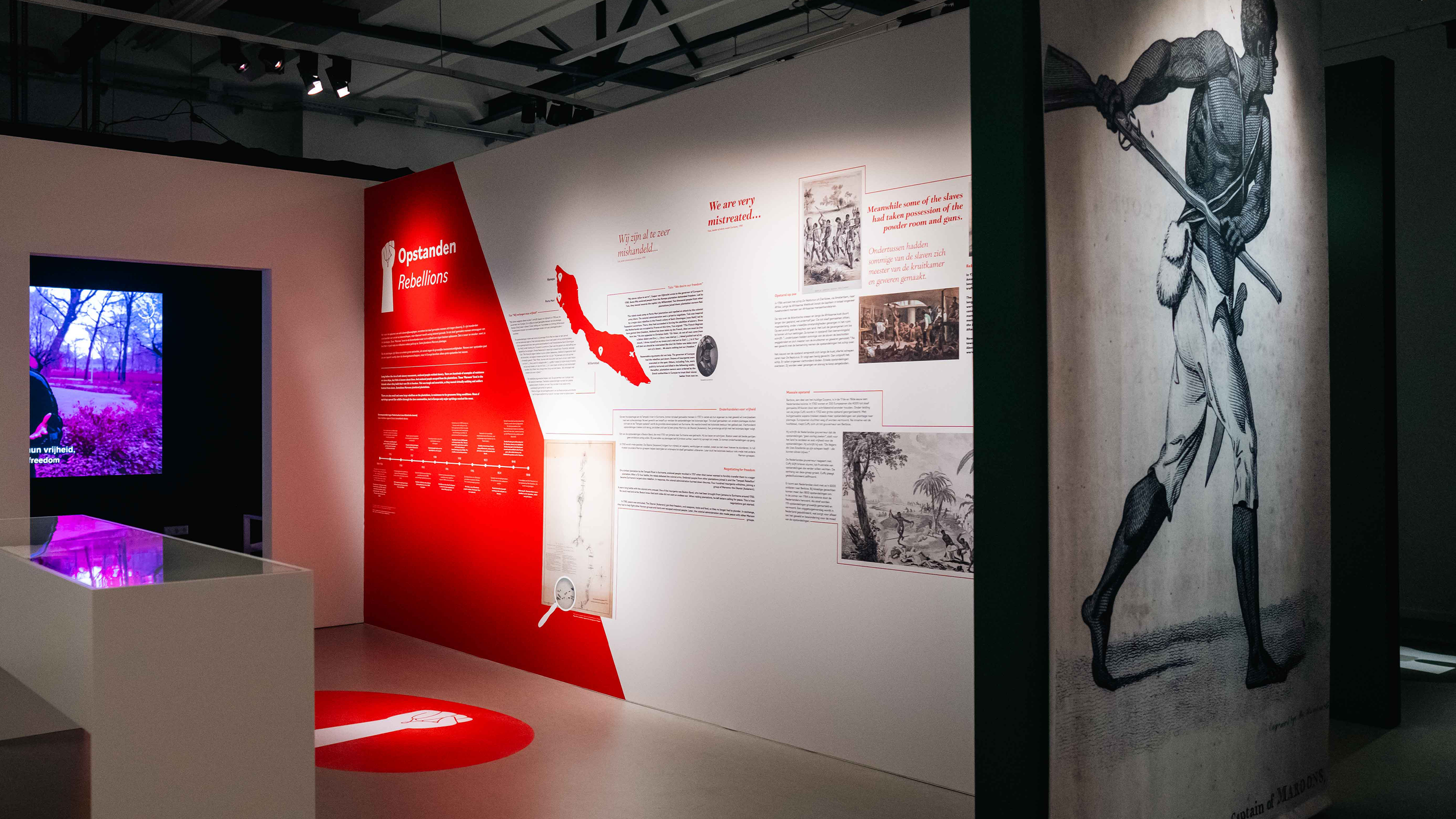
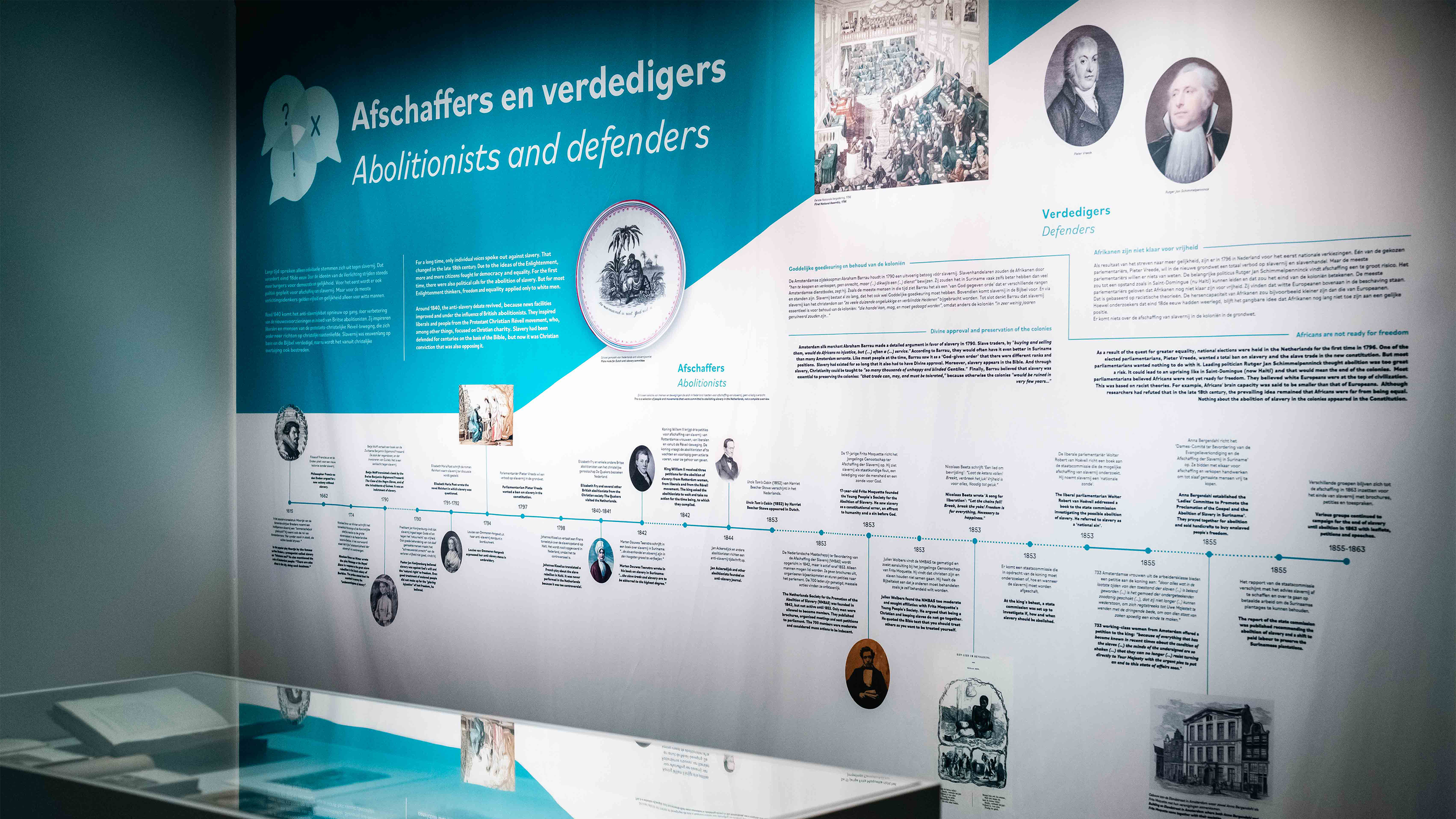
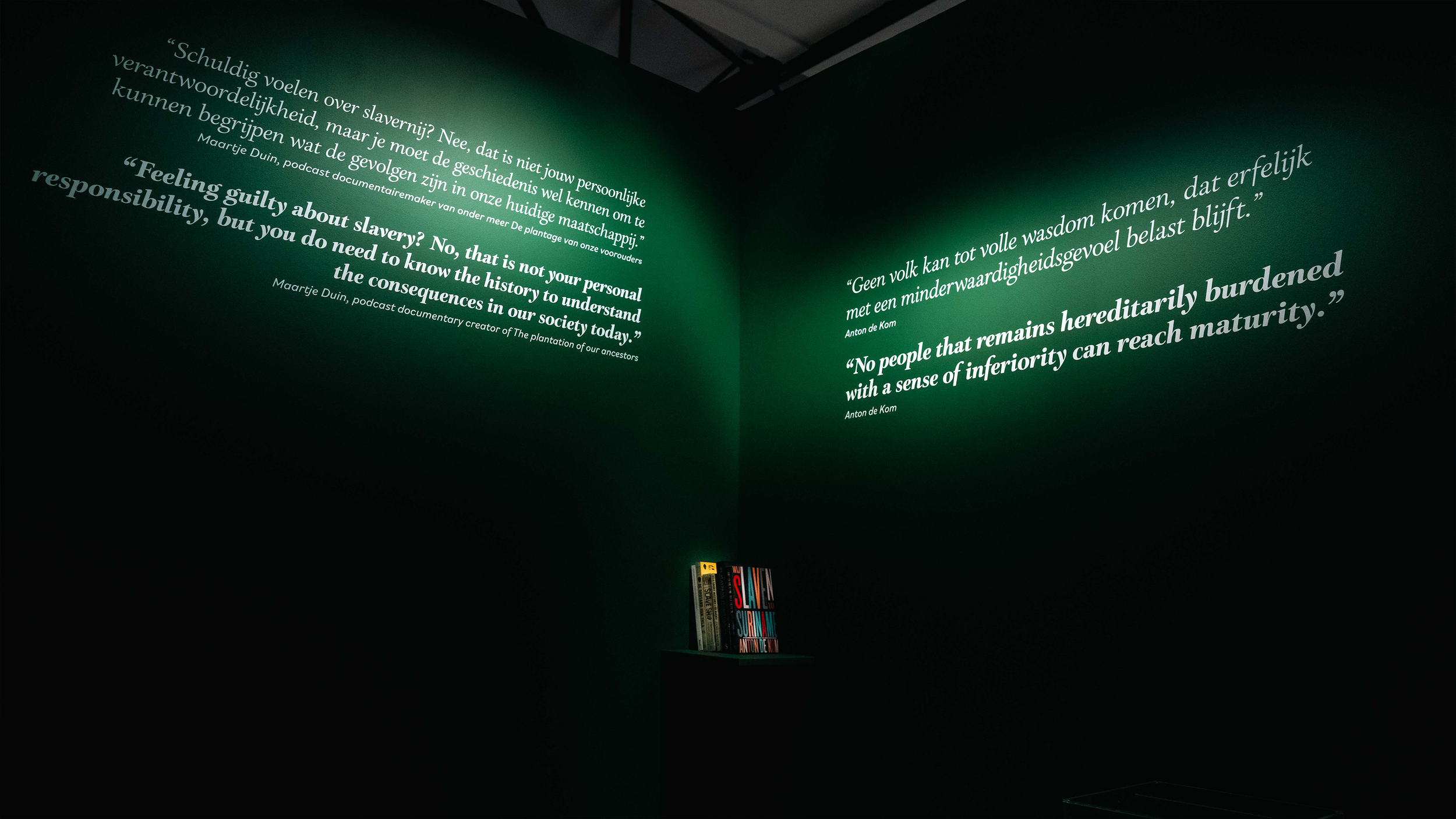
I designed an exhibition system suitable for museum display and adapted the visuals for smaller presentation rooms:
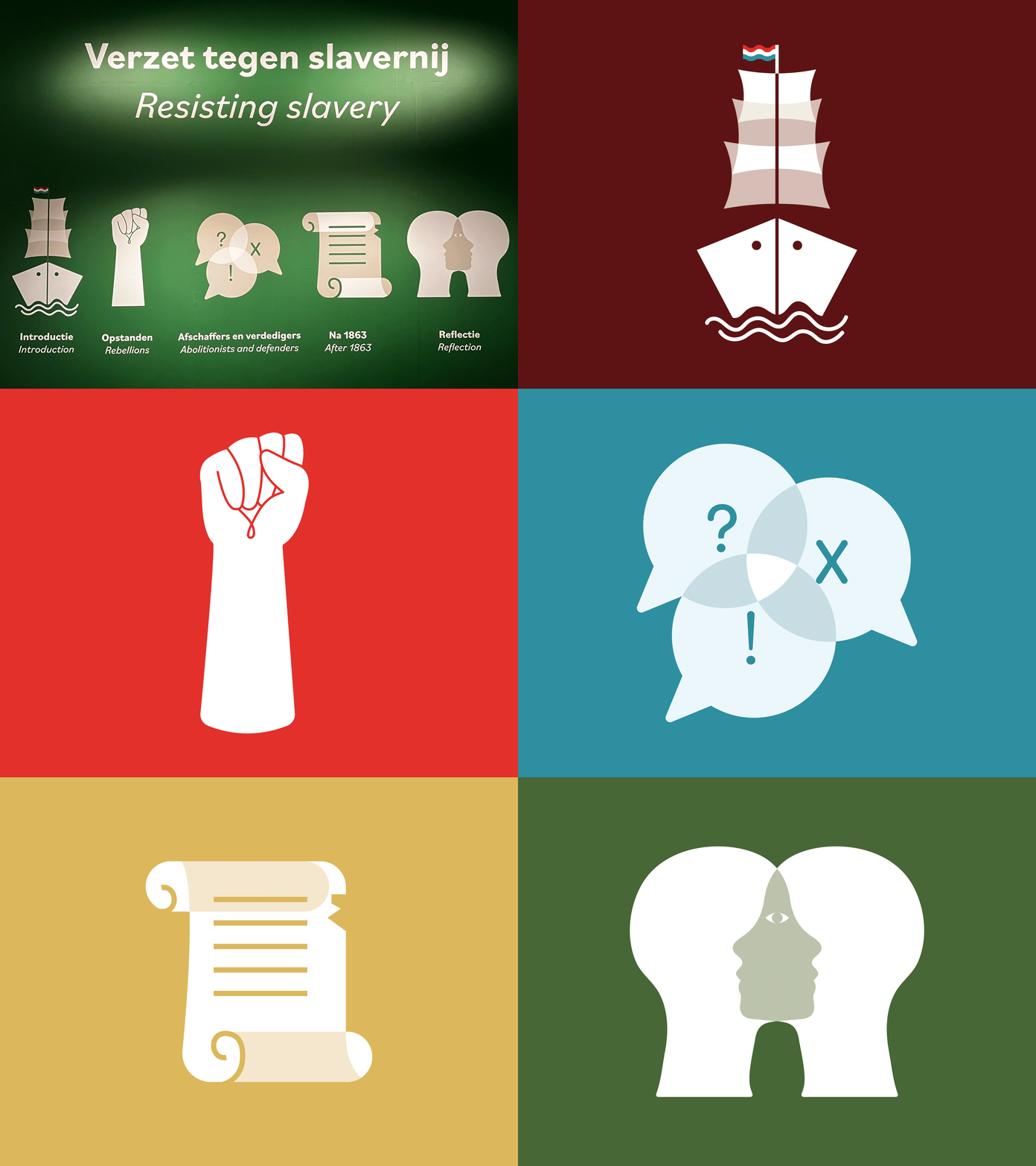
Created thematic iconography to introduce the exhibition’s core themes.
Designed floor stickers to guide visitors through the space and reinforce the narrative flow.
Adapted all designs for mobility, ensuring they could be effectively implemented across various locations and spatial configurations.
The impact
The exhibition successfully traveled to multiple venues, with designs that maintained visual coherence and thematic clarity regardless of location. It invited visitors to enter into dialogue with one another about what the abolition of slavery means and to look at the topic through a new, modern lens that allows vulnerability, questions, and critique.